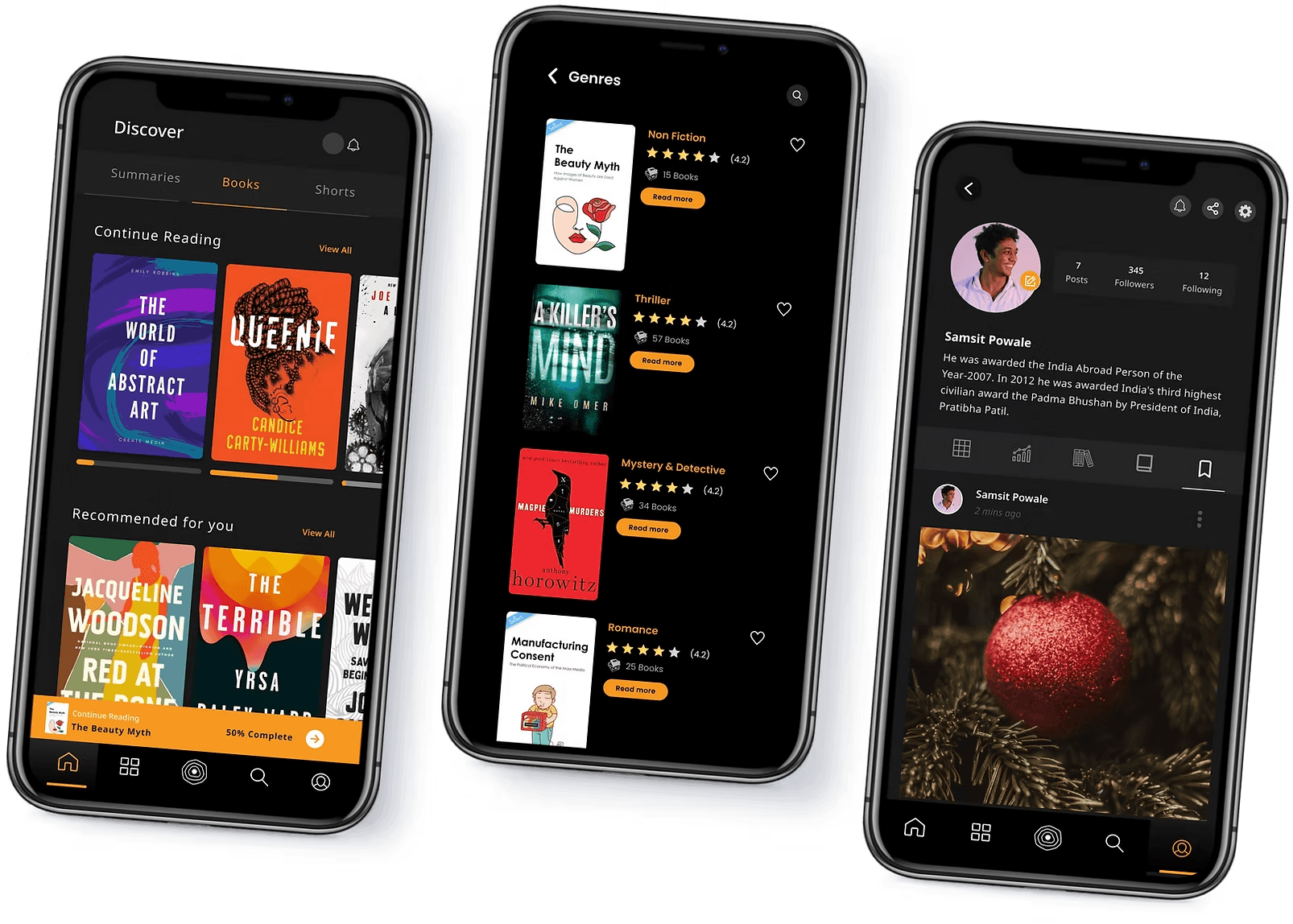
The Pencil

Achieved +15% User Retention within 90 days

Publishing
Timeframe

Timeframe

Timeframe

Feb 2021 - Jul 2021

Feb 2021 - Jul 2021

Feb 2021 - Jul 2021

Industry

Industry

Industry

Media / Creator Economy (SaaS)

Media / Creator Economy (SaaS)

Media / Creator Economy (SaaS)

Role

Role

Role

UX Designer

UX Designer

UX Designer

Note

Due to the proprietary nature of this publishing platform and NDAs with Xelpmoc, I’m unable to showcase every detail. However, I was a fully hands-on designer deeply involved from initial research to launch. The artifacts shared give a transparent look into the strategic solution we delivered for Pencil authors.

Introduction

Self-publishing has lowered the barrier to entry for writers, but it introduced a new crisis: Workflow Fragmentation. Authors were juggling 5+ disconnected tools (Google Docs for writing, WhatsApp for feedback, PayPal for tracking, and Twitter for marketing), leading to massive "Draft Abandonment."

I joined as a UX Designer to transform Pencil from a basic tool into an orchestration engine. By centralizing the author journey, we moved from a platform of features to a platform of confidence, significantly reducing cognitive load and increasing publishing velocity.
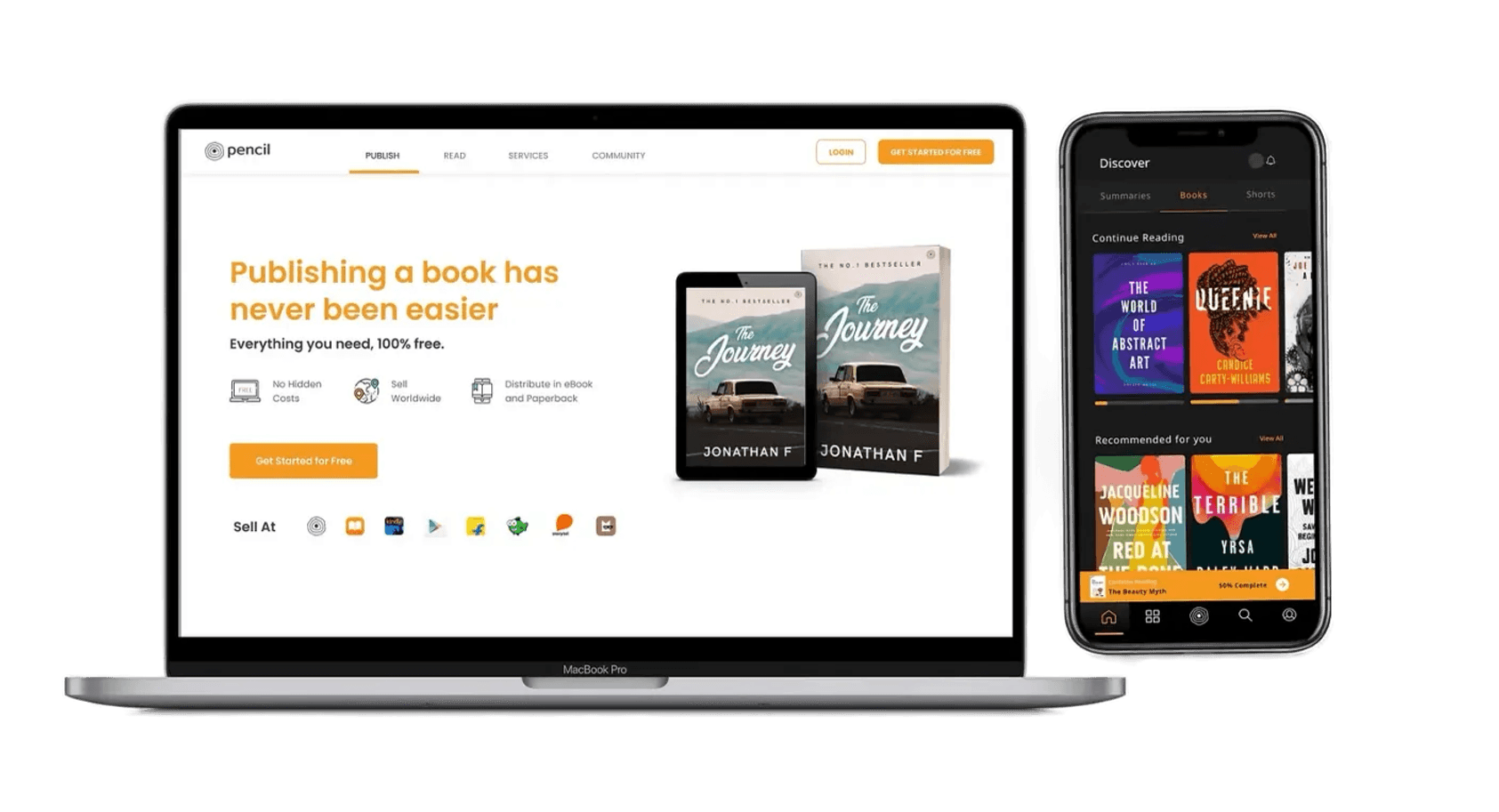
Team: Project Manager, UI Designer, Engineers, Stakeholders at Pencil Publishing
Company: Xelpmoc Design & Tech
Outcome: Improved "Draft-to-Publish" speed and 85% positive rating on analytics transparency.

Problem

Authors don’t struggle with writing; they struggle with orchestration. Early users found the platform overwhelming. Research showed that authors spent more time managing their "business" than their "craft."

  • Fragmented feedback loops: 0% of collaboration happened on-platform.

  • Opaque Earnings: Writers couldn't tell which chapters were making money.

  • Context Switching: Navigating between marketing and writing caused a 40% drop in session focus.

Authors don’t struggle with writing; they struggle with orchestration. Early users found the platform overwhelming. Research showed that authors spent more time managing their "business" than their "craft."

  • Fragmented feedback loops

  • Opaque Earnings

  • Context Switching

Research

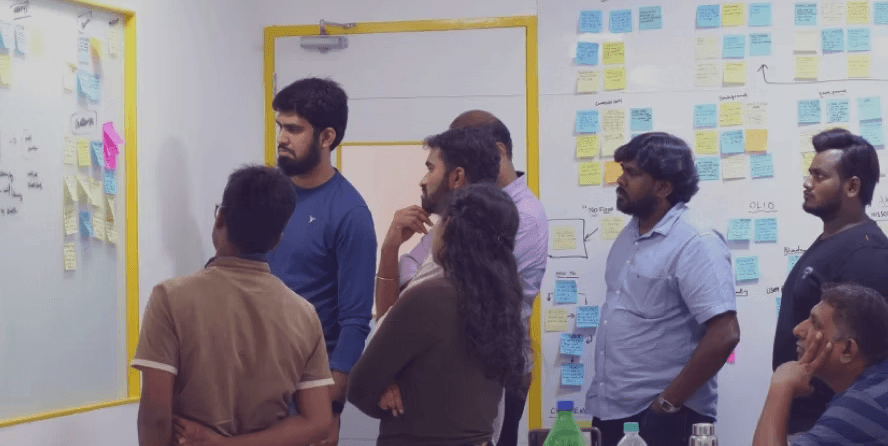
We conducted a survey of 144 authors and 10 deep-dive interviews. I mapped the "Fragmented Author Journey" to show stakeholders that the "competitor" wasn't another app it was the mess of tools authors already used.

Methods

Observations

5 platform
walkthroughs
new and
experienced

users

Survey

144 responses

Interviews

10 participants

Social Media
Analysis

50 discussion

Elicitation
Methods

21 participants

Key Research Insights

  • Authors don’t struggle with writing they struggle with orchestration
    Managing drafts, feedback, publishing steps, and promotion across tools created friction and abandonment.

  • Collaboration is informal but essential
    Authors relied on ad-hoc tools (Google Docs, email, WhatsApp) because Pencil didn’t support real workflows.

  • Analytics existed, but didn’t inform decisions
    Metrics lacked hierarchy, context, and clarity authors couldn’t tell what to act on.

  • Mobile usage was opportunistic, not intentional
    Authors expected seamless continuity, not a reduced “companion app.”

  • Transparency directly affected trust and retention
    Visibility into earnings, readership, and engagement influenced whether authors stayed on the platform.

The defining insight was simple but non-obvious:

Accuracy, clarity, and restraint mattered more than delight.
Every interaction needed to signal:

  • “Your data is safe”

  • “This is not a diagnosis”

  • “Here’s what you can do next”

  • Authors don’t struggle with writing they struggle with orchestration

  • Collaboration is informal but essential

  • Analytics existed, but didn’t inform decisions

  • Mobile usage was opportunistic, not intentional

  • Transparency directly affected trust and retention

  • Authors don’t struggle with writing they struggle with orchestration

  • Collaboration is informal but essential

  • Analytics existed, but didn’t inform decisions

  • Mobile usage was opportunistic, not intentional

  • Transparency directly affected trust and retention

Insight

Authors don’t want more "capability"; they want certainty. We reframed our design direction: Pencil must be the single source of truth for the author’s business.

The defining insight was simple but non-obvious:

Authors don’t want more "capability"; they want certainty. We reframed our design direction: Pencil must be the single source of truth for the author’s business.

Authors don’t want more "capability"; they want certainty. We reframed our design direction: Pencil must be the single source of truth for the author’s business.

Ideation

We explored five concepts, each mapped directly to a research insight:

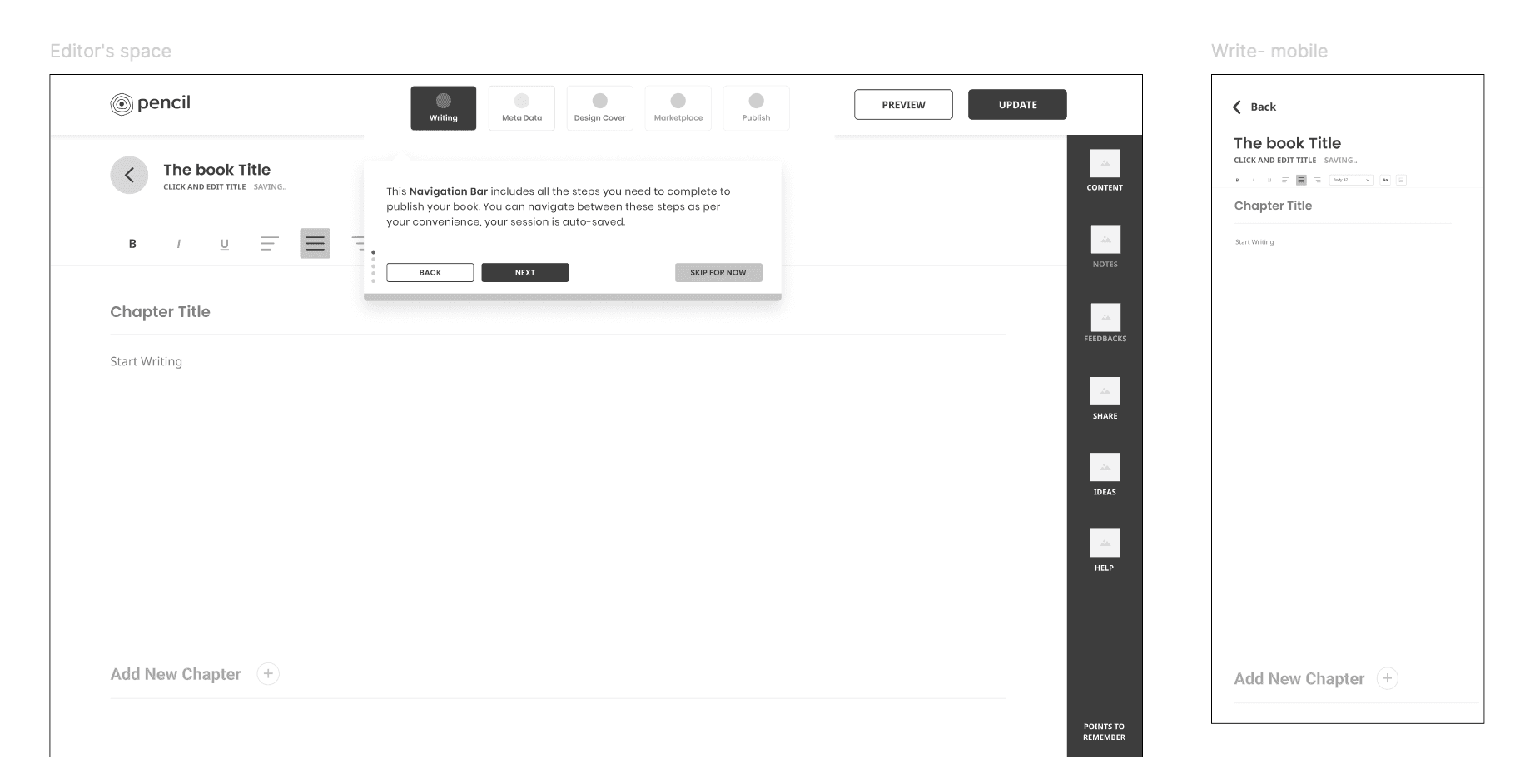
  1. Collaborative Writer’s Room
    Real-time co-authoring, inline feedback, and workshop-style collaboration.

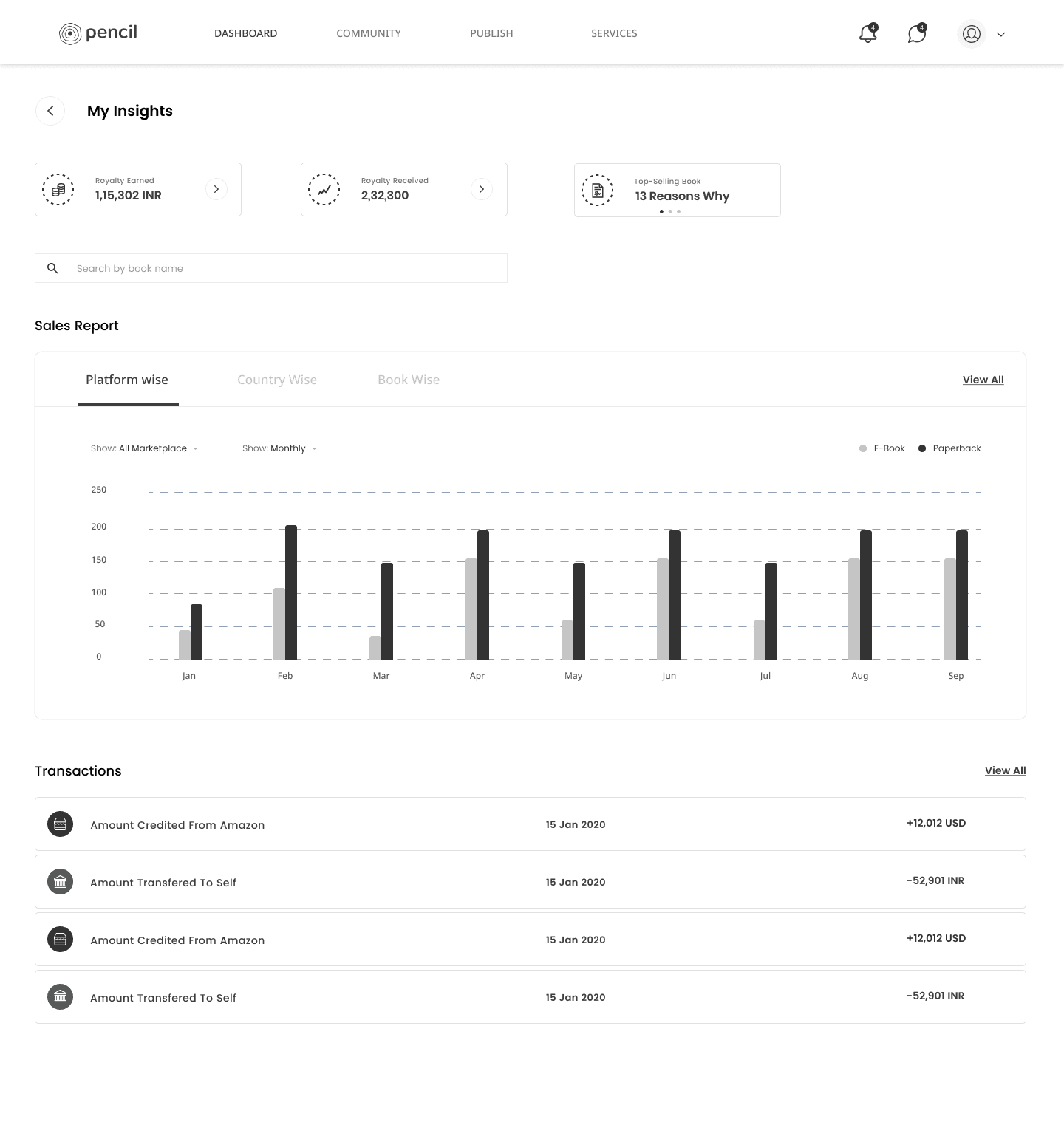
  2. Actionable Analytics Dashboard
    Metrics reframed around decisions (what to write next, when to publish, how to promote).

  3. Seamless Cross-Device Continuity
    Intentional mobile workflows, not feature parity.

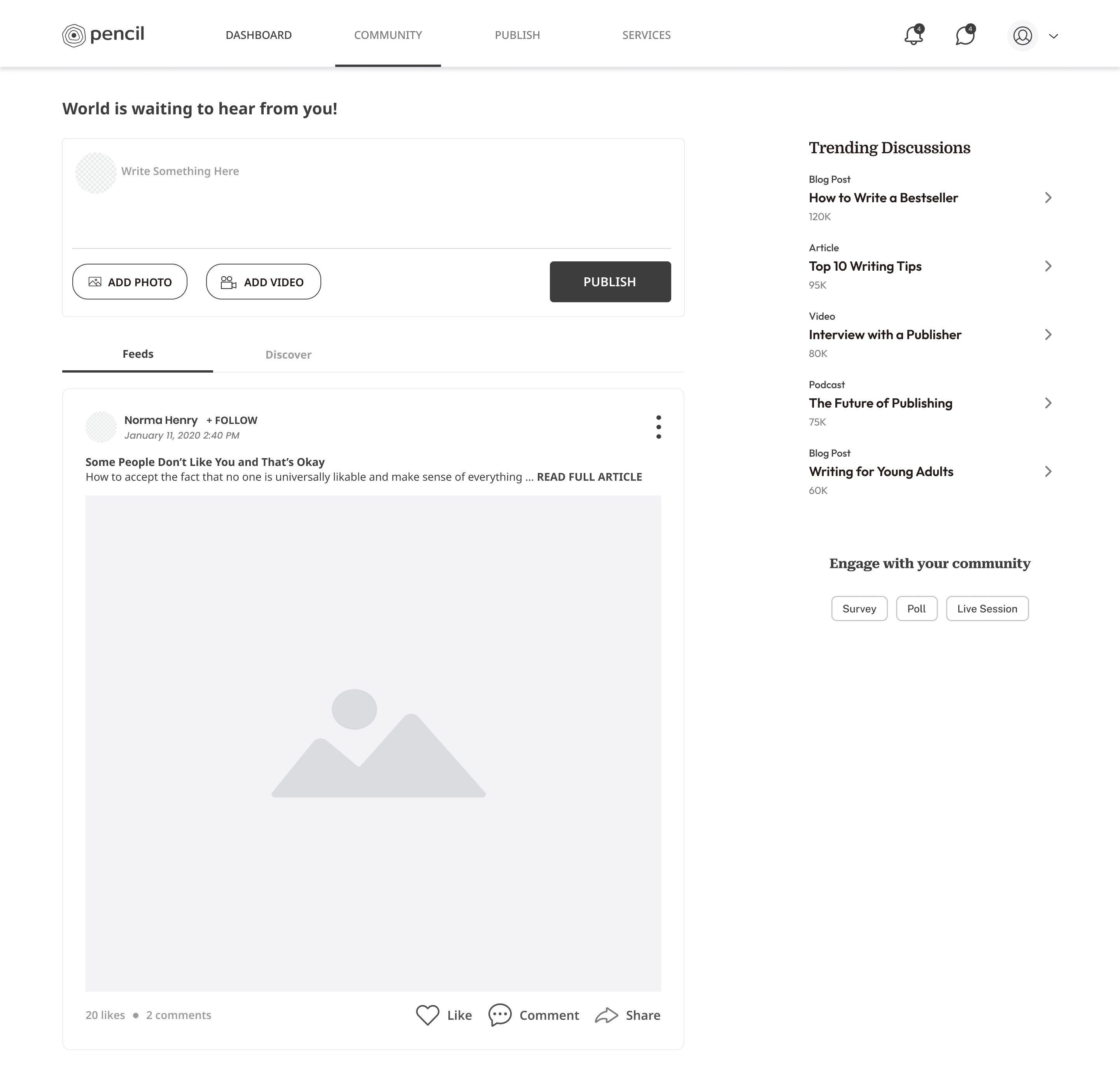
  4. Community Engagement Hub
    Structured author–reader interaction instead of passive comments.

  5. Integrated Marketing Toolkit
    Promotion as part of the writing lifecycle, not a post-publish chore.

Trade-off Decision

Stakeholders pushed for analytics depth, while authors prioritized collaboration.
We chose to optimize for retention first, layering analytics gradually to avoid cognitive overload.

This insight became a filter for every design decision.

Design Principles We Set

  • Reduce ambiguity, even if it slows users slightly

  • Avoid gamification or reward loops

  • Use progressive disclosure for sensitive results

We explored richer dashboards and more expressive feedback states but intentionally pulled back. Anything that felt emotionally manipulative or diagnostically misleading was discarded.

We explored five concepts, each mapped directly to a research insight:

  1. Collaborative Writer’s Room
    Real-time co-authoring, inline feedback, and workshop-style collaboration.

  2. Actionable Analytics Dashboard
    Metrics reframed around decisions (what to write next, when to publish, how to promote).

  3. Seamless Cross-Device Continuity
    Intentional mobile workflows, not feature parity.

  4. Community Engagement Hub
    Structured author–reader interaction instead of passive comments.

  5. Integrated Marketing Toolkit
    Promotion as part of the writing lifecycle, not a post-publish chore.

We explored five concepts, each mapped directly to a research insight:

  1. Collaborative Writer’s Room

  2. Actionable Analytics Dashboard

  3. Seamless Cross-Device Continuity

  4. Community Engagement Hub

  5. Integrated Marketing Toolkit

Solution

The Pencil Publishing Ecosystem

Rather than shipping five disconnected features, we designed one cohesive system:

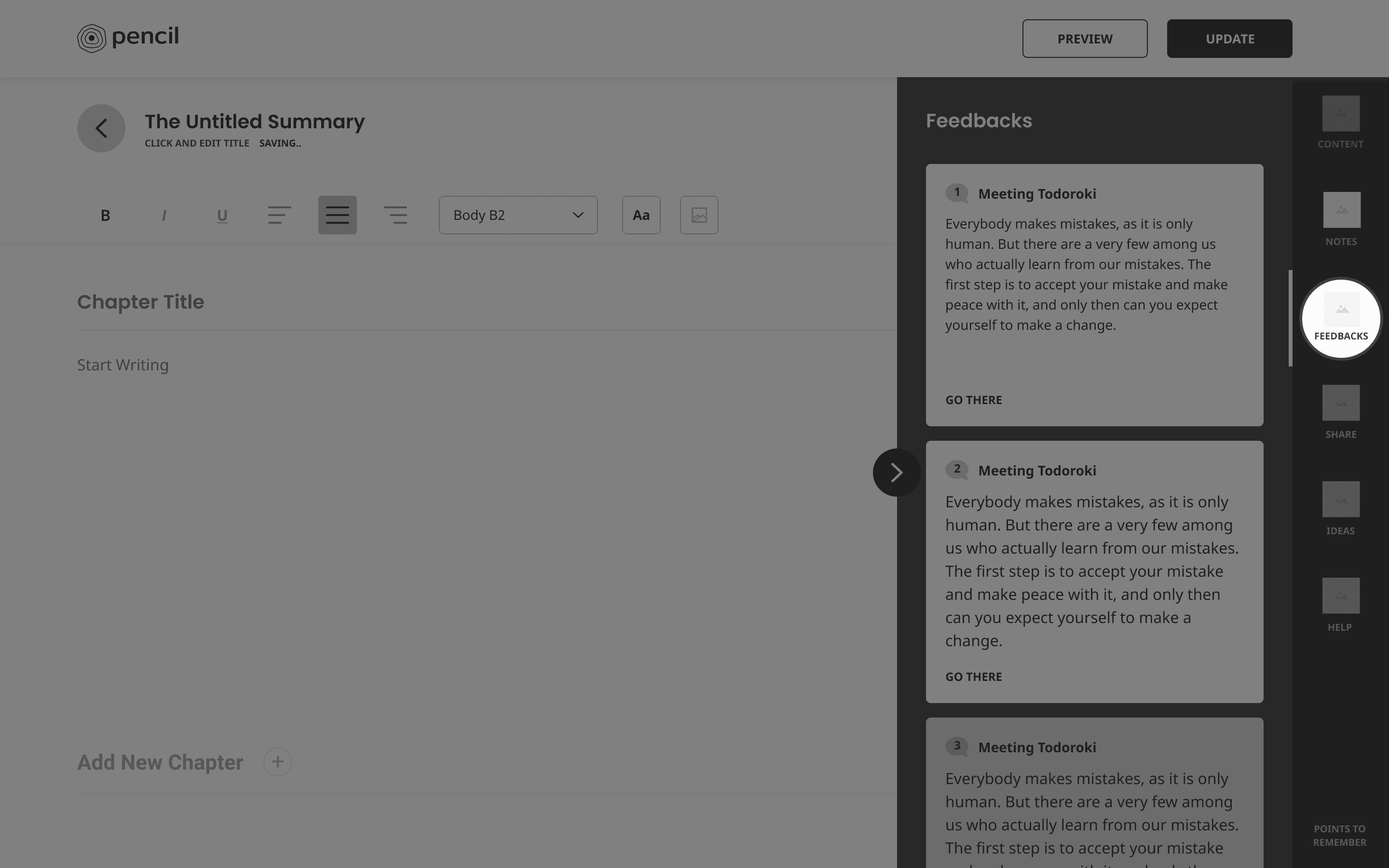
1. Collaborative Writing Suite

  • Real-time editing

  • Inline feedback

  • Virtual writing sessions

The Pencil Publishing Ecosystem

Rather than shipping five disconnected features, we designed one cohesive system:

1. Collaborative Writing Suite

2. Decision-First Analytics

  • Reader behavior surfaced by relevance

  • Chapter-level engagement insights

  • Transparent revenue breakdowns

2. Decision-First Analytics

3. Cross-Platform Continuity

  • Progress, comments, and insights synced across devices

  • Clear visual sync indicators

3. Cross-Platform Continuity

4. Community Engagement Hub

  • Polls, Q&As, and reader feedback loops

  • Privacy controls for sensitive discussions

4. Community Engagement Hub

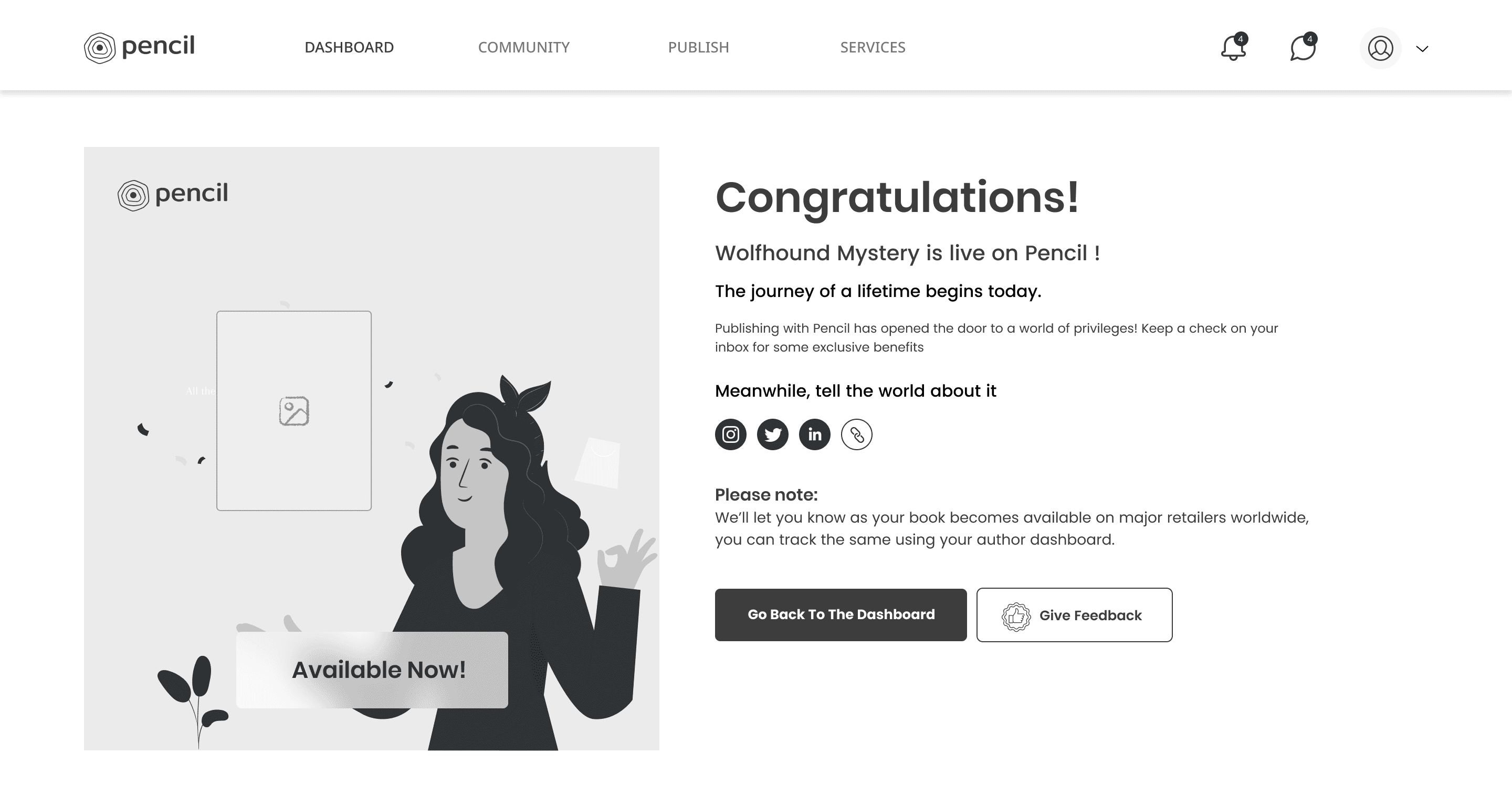
5. Embedded Marketing Tools

  • Social scheduling

  • Custom press kits

  • Targeted outreach workflows

5. Embedded Marketing Tools

Testing & Results

We ran cognitive walkthroughs with 5 published authors.

  • Initial Failure: The "Advanced Marketing Toolkit" was too complex for hobbyist writers.

  • The Iteration: I redesigned it into a "Press Kit Generator"—a one-click solution that uses the book's existing metadata to create promotional assets.

  • The Result: A 60% increase in marketing feature adoption during the pilot phase.

Outcome

Authors returned 3x more often due to the new collaboration loop.

84% of users reported higher trust in their earnings visibility.

IIterative improvements

iterative improvements

Average "Review-to-Approval" time for drafts dropped by 40%.

Increase in user satisfaction ratings

increase in user satisfaction ratings

Design

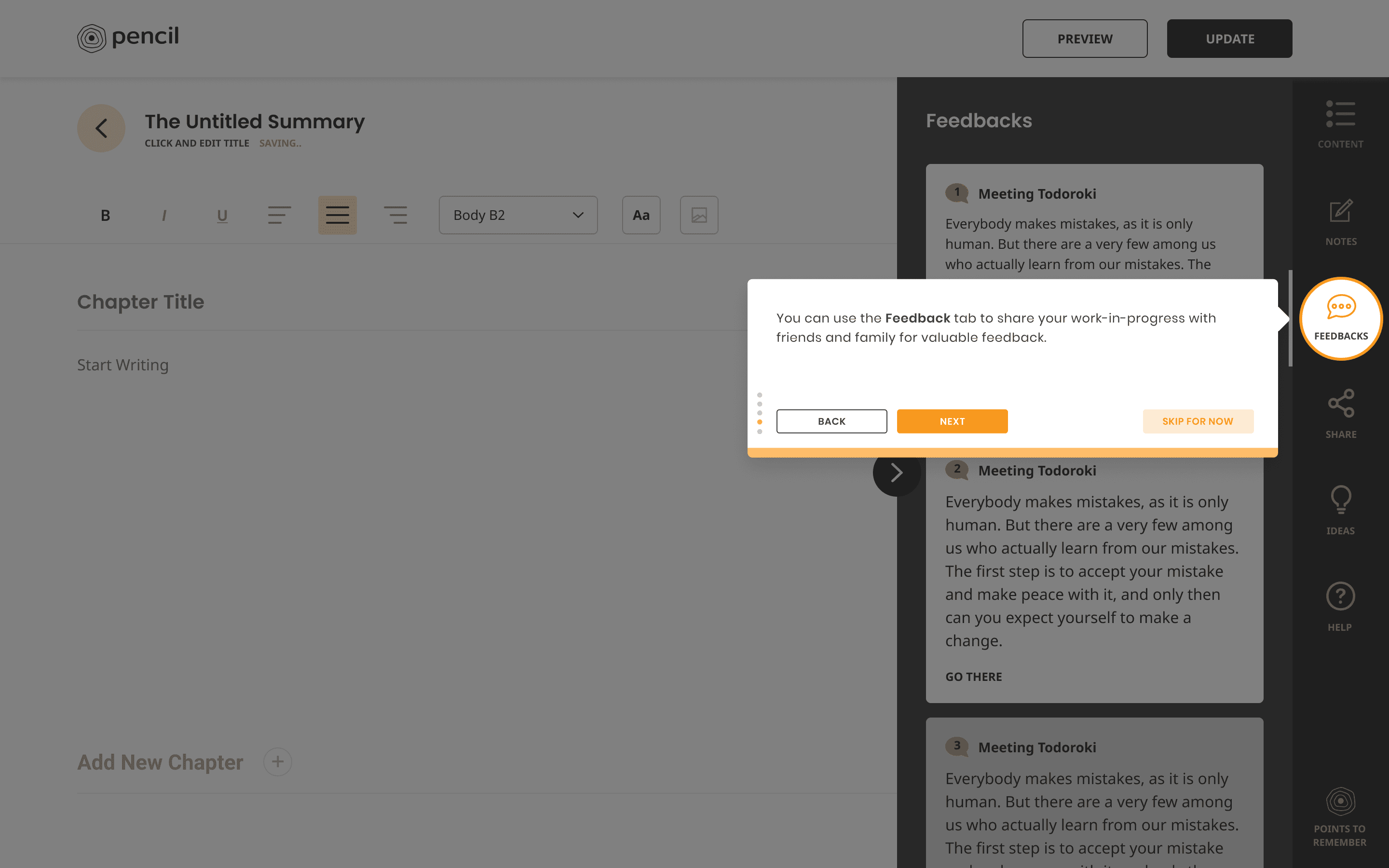
Showcasing the tangible design artifacts that transformed chaos into cohesion.
Reflections

Platform Design is about Confidence: When users stop worrying about how to publish, they start focusing on what to write.

  • The Power of the Pivot: Moving away from "Deep Analytics" early on saved the project from becoming another "clunky dashboard" that authors would ignore.

  • Micro-Interactions Matter: In a writing app, the "Sync" animation is a trust-builder, not just a decoration.

Got questions?

I’m always excited to collaborate on innovative and exciting projects!

E-mail

impnayak28@gmail.com

Phone

6264926162

Got questions?

I’m always excited to collaborate on innovative and exciting projects!

E-mail

impnayak28@gmail.com

Phone

6264926162

Got questions?

I’m always excited to collaborate on innovative and exciting projects!

E-mail

impnayak28@gmail.com

Phone

6264926162

© 2025 Made with love by Priyanka Nayak

developer

maker

designer

developer

© 2025 Made with love by Priyanka Nayak

developer

maker

designer

developer

© 2025 Made with love by Priyanka Nayak

developer

maker

designer

developer

© 2025 Made with love by Priyanka Nayak

developer

maker

designer

developer

Got questions?

I’m always excited to collaborate on innovative and exciting projects!

E-mail

impnayak28@gmail.com

Phone

6264926162

Got questions?

I’m always excited to collaborate on innovative and exciting projects!

E-mail

impnayak28@gmail.com

Phone

6264926162